Insights
01 JUL 2026
FMCG supply chains depend on predictability. That's why Nurminen Logistics manages the entire transport chain between Europe and Sweden – from local pickup and consolidation at strategic European terminals to rail transport and final delivery in Sweden. With one dedicated point of contact from pickup to delivery, we provide reliable rail-first door-to-door logistics designed for fast moving consumer goods.
FMCG benefits from rail freight
Retailers, distributors, and producers moving goods between Sweden and Europe depend on continuous product flow. Replenishment cycles are short, volumes fluctuate, and demand rarely stands still. Whatever moves the goods needs to deliver consistent performance, not just add capacity.
Road-only transport is exposed to driver shortages, congestion, and border variability, all of which work against the consistency FMCG replenishment depends on. Rail removes the long-haul leg from that exposure. Consolidated volumes run on fixed schedules rather than competing for road capacity, which gives FMCG supply chains a transit time they can plan around instead of one that shifts with traffic and driver availability week to week.
Shifting FMCG from road to rail
Road-only transport still works well for some companies and on shorter routes. But for many FMCG shippers moving larger or more frequent volumes over longer distances between Sweden and Europe, shifting the long-haul transport to rail, and keeping road transport to first- and last-mile only, brings a number of advantages:
- Fewer touchpoints, less handling risk. Goods move from pickup to consolidation to rail to terminal within one operational chain, instead of being reloaded between multiple subcontracted carriers, which lowers the risk of damage and shrinkage on high-volume FMCG loads.
- Capacity that scales with demand. Consolidated rail volumes absorb seasonal peaks and promotional spikes without shippers falling back on spot-market road rates when trucking capacity tightens.
- Supports your sustainability goals. A lower emissions profile than road-only transport over the same distance helps reduce Scope 3 emissions in FMCG supply chains.
How the transport flow works
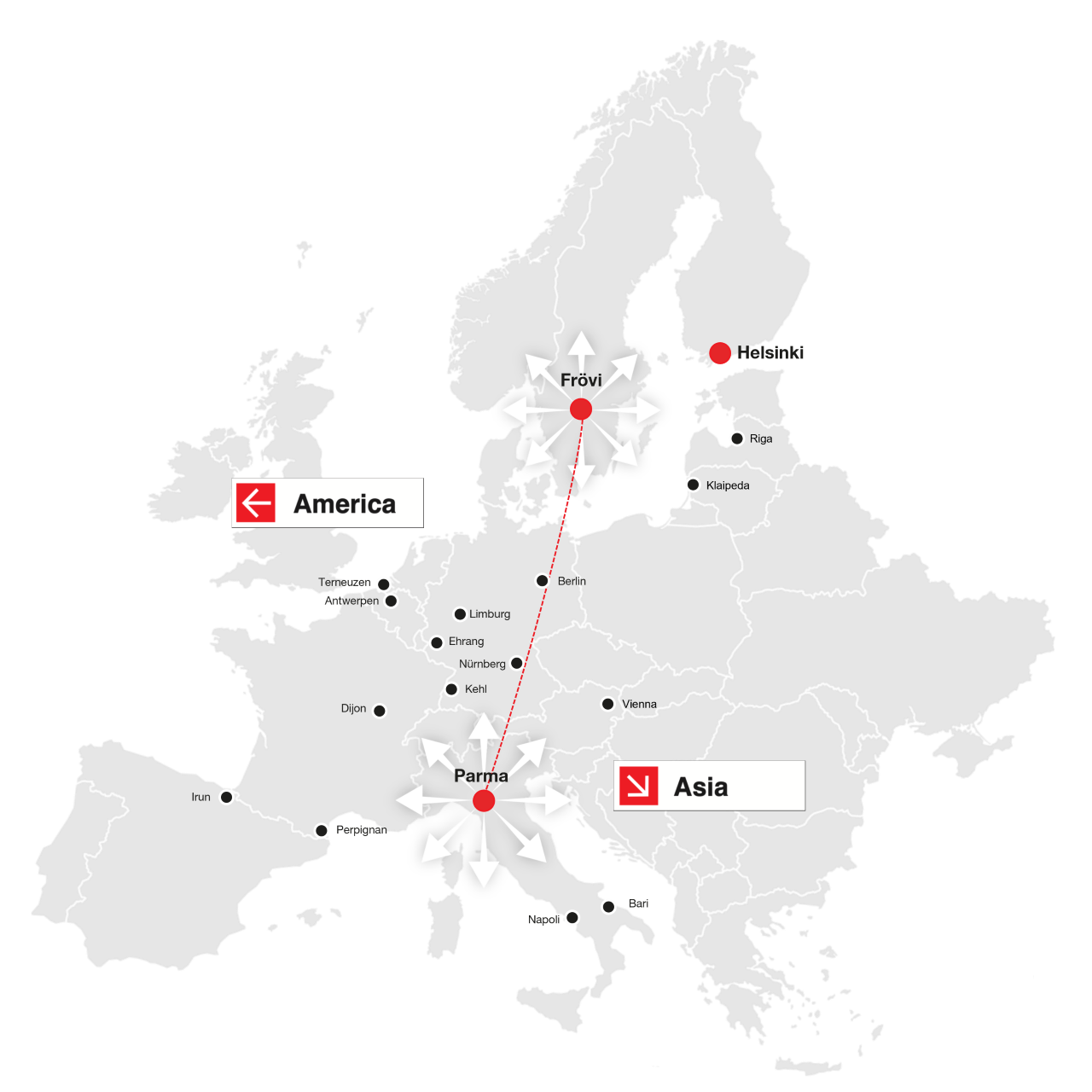
If you’re looking to benefit from rail freight for your FMCG transport, Nurminen Logistics is your trusted logistics partner. We manage the entire transport chain from Europe to Sweden, giving you one logistics partner and one dedicated point of contact from pickup to final delivery. The result is a seamless, reliable, and predictable transport solution.
- Local pickup: Goods are collected by truck directly at the supplier or distribution center.
- Consolidation: Shipments are grouped at strategic European terminals, allowing LCL volumes alongside full loads.
- Rail transport: Consolidated cargo moves by rail into Sweden, operated by Nurminen Logistics end to end.
- Terminal handling: Shipments arrive at our terminal in Örebro, where they're processed and prepared for distribution.
- Last-mile delivery: Final destinations is completed by road transport across Sweden.
Last-mile distribution in Sweden
Our terminal, the Nurminen Nordic Hub in Frövi outside Örebro, is where the European rail flow converts into Swedish distribution. Inbound rail volumes are cross-docked and sorted for onward road delivery, giving us direct control over how quickly cargo moves from terminal arrival to final delivery, rather than depending on a separate distribution subcontractor.
Transport partner built for FMCG
Nurminen Logistics operates the full chain (pickup, consolidation, rail, terminal, and last-mile delivery) as one service, not a string of separate bookings. For FMCG shippers, that means fewer points of failure, consistent transit times, and one contact person who follows your shipment the whole way between Sweden and Europe.
Get in touch to discuss volumes, schedules, and how a rail-first setup would work for your supply chain.